How You Can Help
Not only can you help prevent sewer blockages, you can also be environmentally friendly by recycling your used cooking oil. Cooking oil is filtered and processed for use in many products such as livestock feed, soaps, biofuels, fertilizer. Cooking oil should free of water, soap suds and food scraps, and should be transported in a clean, non-breakable, leak-proof container with a tight lid
Many areas have free neighborhood papers; they
are often looking to fill the space between ads.
An article can help get out the word about a
special event or to remind people about your
Residential Cooking Oil Recycling and Education
program. Condos, over 55 communities and
homeowners associations have E newsletters.
They are usually looking for interesting and
helpful information to pass along to residents. If
a pump station in the neighborhood is
accumulating grease, give them an article.
“Residential sewer line clogs cause major
problems for homeowners and the wastewater
collection system. When fats, oils and grease are
poured down your kitchen drain, they stick to the
walls of the sewer pipes. This creates buildup,
eventually restricting the flow. Pipes that have
buildup must be cleaned more frequently and be
replaced sooner. This is an added cost for ….
Used cooking oil is a resource that can be
utilized. …collection points for household
cooking oil …”
Outreach does not have to cost money to be
effective

Why should we keep fat,
oil, and grease (FOG) out
of the sewer?
When fat, oil and grease are poured down your kitchen drain, they stick to the walls of the sewer pipes. This creates layers of buildup, eventually restricting the flow of water. Pipes that have buildup must be cleaned more frequently and may need to be replaced sooner than expected - large expenses for the wastewater utility and therefore taxpayers. Buildup may also cause blockages that result in sewage overflowing into your streets, communities, and homesFOG Facts
What products contain fat, oil and grease (FOG)? FOG are natural by-products of cooking and food preparation process. Any food products that go down the drain contributes to buildup. What can I do to keep FOG out of the sewer? Fat, oil and grease should NEVER be poured down the sink. Before washing, scrape and wipe out pots, pans and dishes and dispose of materials in the trash. Minimize or discontinue use of the garbage disposal. The garbage disposal chops up particles into small pieces that can still contribute to a blockage in the pipe. Use strainers to catch food particles and empty the strainer into the trashTake container to your
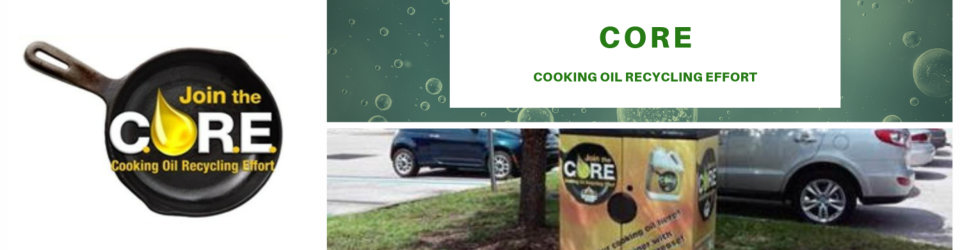
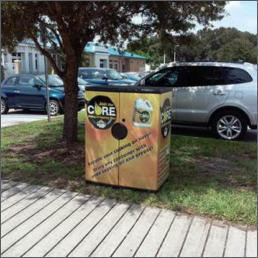
local Cooking Oil
Recycling Drop Point
Let your cooking oil cool to room temperature and pour or scrape it into a shatterproof container. Top off container with absorbent material such as kitty litter and cap it. Seal container in a plastic bag and throw it in the trash.
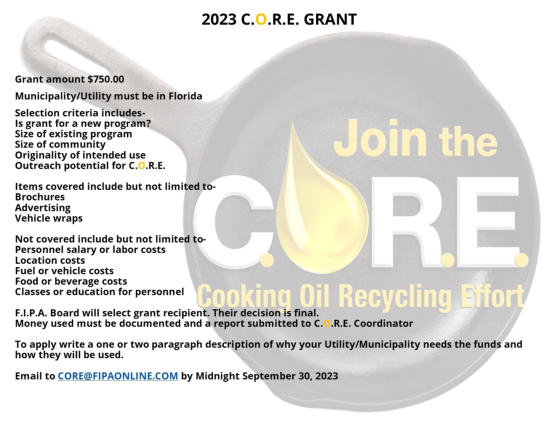
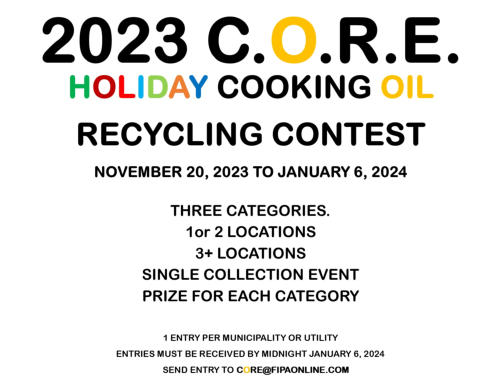
The “CORE” Cause: The Florida Industrial Pretreatment Association’s Cooking Oil Recycling Effort (C.O.R.E.) was
developed as a state-wide initiative to educate citizens and municipalities on residential used cooking oil
collection and recycling.



FIPA 2018